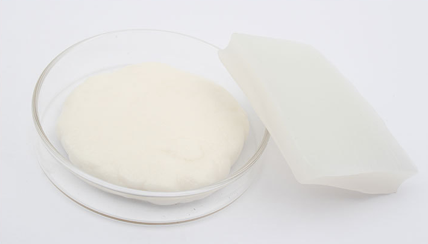
Match antimicrobial paste with liquid silicone system
AEM5700-PB for the antibacterial development of corresponding transparent or opaque liquid silicones. Engineers design ingredients and dispersions based on single-component or two-component rubber and curing systems, as well as transparency, appearance and antibacterial evaluation of supporting parts.
Liquid glue ingredients and antimicrobial paste dispersion
Arrange the addition around the existing batching, mixing and moulding processes to check that the antimicrobial paste is evenly incorporated into the mass. The two-component rubber retains its original ratio. Which component to add antimicrobial paste and the mixing sequence should be determined based on the lab trial of the rubber system; at the same time, the actual time between mixing and moulding should be recorded.
Observe the material body first, then the curing parts
- Mixture body: observe uniformity, viscosity, visible particles and bubbles.
- Curing process: Compare the moulding, surface and demoulding status of the original formula and the added sample.
- Transparent or light-coloured parts: Compare the light transmission, haze and colour difference under the actual wall thickness.
- Final part: Check existing requirements such as hardness, elasticity, feel and size.
Arrange antibacterial evaluation according to actual use conditions
We use cured parts to carry out antibacterial evaluation, and arrange post-processing samples for use scenarios such as cleaning, contact with water and friction, and compare the functions of the original glue and added samples from the same batch.
Fix the ingredients conditions before mass production
We record rubber batches, component ratios, paste amounts and moulding conditions, follow up on changes in pigments and curing systems, and provide process coordination for mixing uniformity and curing parts.
Corresponding product and model details
Frequently asked questions
For liquid silicone, should I add antimicrobial paste to material A or material B first?
Engineers design the adding position according to the specific rubber material and curing system, maintain the original component ratio, and support the mixing sequence, dispersion and curing development.
Can the glue mixing method of solid silicone be directly used for liquid glue?
The solid glue is pressed by mixing the rubber, and the liquid glue is mixed with ingredients. We provide metering, dispersion and forming advice for both routes.
The material body has been mixed, why do we still need to compare curing pieces?
We incorporate the uniformity of the material body, bubbles, curing and demoulding, as well as the transparency, hardness and antibacterial performance of the parts into the same development process.
Can transparent products and opaque products use the same sample result?
Transparent parts use actual wall thickness to compare light transmission and haze, opaque parts use actual colour materials to compare colour difference and surface, and match their respective moulding and usability.