
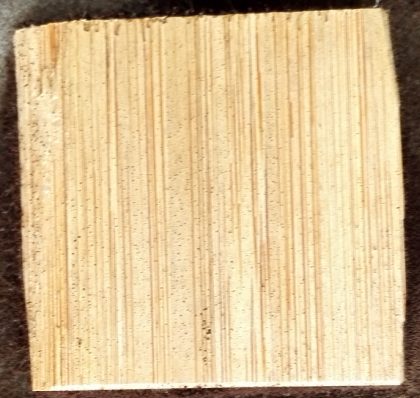
First clarify whether the additive should be added to the plate or to the coating
When the bamboo board already has a water-based coating process, the anti-mould treatment can start from the process position: one is to perform additional treatment on the surface of the board, and the other is to add appropriate anti-mould components to the water-based coating, and then paint according to the existing method.
We compare the surface treatment of the board with the added groups in the coating, analyze the new processes, formulas and construction sequences, and provide corresponding materials and coating solutions.
Keep observation records using actual processed bamboo boards
This set of bamboo board samples comes from the process comparison of surface treatment and water-based coating addition. The surface conditions of the two samples are recorded separately, and the observations need to be analyzed in conjunction with their respective processing methods.
We use bamboo board samples that have been painted and dried to record the appearance of the coating, the combination with the substrate and the culture status, and analyze the processing and protection performance.

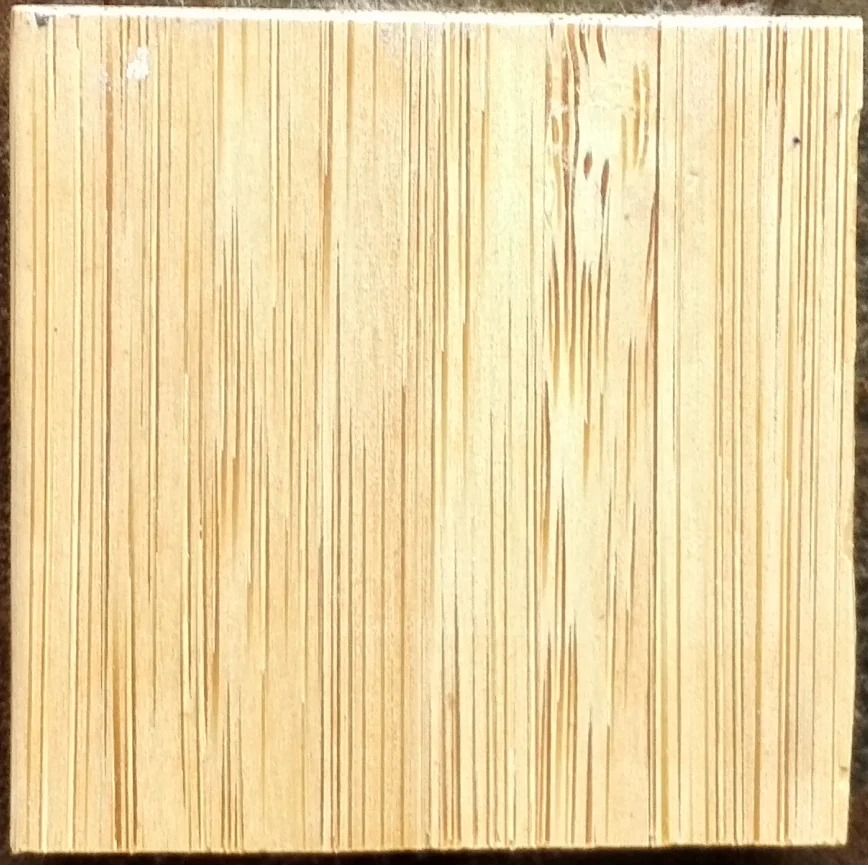
List the changed conditions clearly when comparing
Each group recorded the bamboo board batch, water-based coating, additive addition location, construction and drying conditions, and used untreated samples from the same batch as a control to analyze the impact of process changes.
If one group sprays an extra treatment solution and another group changes the water-based coating formula, these two points should be written directly into the record. Only when differences in appearance or culture status occur later can we return to the corresponding processing path analysis.
Integrating mould protection into existing finishes
Incorporating mould-resistant components into existing finishes can be used to evaluate routes to reducing additional surface preparation. We simultaneously compare the coating compatibility, appearance and anti-mould performance of bamboo boards to select suitable production processes.
Engineers formulate addition suggestions based on the coating system, construction dosage and plate status, and retain sample preparation conditions for subsequent trial production.
Connect production from process samples
We keep batching, construction and drying records according to the selected path and connect the production samples. When the source or coating of bamboo boards changes, corresponding formula and process adjustments will be provided.
After the board is painted and dried, it will be packed in a clean and dry lining and carton, and the production and mould prevention will be implemented in conjunction with packaging, storage and transportation.
Frequently asked questions
How to add bamboo boards to the water-based coating to prevent mould?
can be added to the coating to connect to the existing coating process. We designed the compatibility based on the water-based coating, construction method and bamboo board condition, and compared the appearance and anti-mould performance of the painted samples.
How does surface spraying compare with adding in paint?
Use the same batch of bamboo boards, prepare samples according to two processes, and retain the samples without additional treatment. Record the treatment methods, construction dosage and drying conditions, and then compare them based on the surface condition and culture observation.
If I switch to other water-based coatings, can I continue to use the original addition method?
We make bamboo board samples according to the new coating formula, construction and drying conditions, analyze the compatibility, board surface and mould-proof performance, and update and add suggestions.
Updated: 2026-10-29