
Bamboo materials and bamboo products
Confirm the soaking method and subsequent drying arrangements around the material, size and absorption state of the bamboo.
Application highlights
bamboo and wood material mould proof / soaking treatment
Soaking and anti-mould treatment for bamboo and wood and rattan. The liquid preparation, infiltration and drying are completed in the material processing stage, and the mould prevention process is integrated into the production process of bamboo and wood products.
Dosage reference: 1:50~1:100. Engineers provide measurement and processing advice.
Discuss this product / samples Request MSDS / SDS, REACH, RoHS documentsUsed for soaking and anti-mould treatment of bamboo, wood and rattan, connecting soaking, drying and subsequent processing. We provide material treatment process services.
Confirm the soaking method and subsequent drying arrangements around the material, size and absorption state of the bamboo.
Incorporate anti-mould soaking into the wood treatment process, and conduct small trials in conjunction with subsequent gluing, painting and packaging requirements.
Pay attention to the wetting of the woven structure and whether the colour, smell and appearance after drying meet the product requirements.
If the product has been produced and it is inconvenient to soak it, you can separately communicate about the mould prevention of the finished product packaging; if mould spots have already appeared, check the materials, processes, and storage and transportation conditions first, and then arrange for rectification.
Learn about anti-mould solutions for finished product packaging Communicate and troubleshoot mould problemsCoordinate processing steps with field devices. The soaking time and drying conditions are confirmed by actual materials and lab trial results.
Prepare AEM5700-2 soaking solution with water according to the confirmed proportion and mix evenly.
Put bamboo and wood or rattan into the soaking liquid, evenly infiltrate each treatment part, and arrange the treatment time according to the absorption and thickness of the material.
After processing, take out the material, dry it naturally or at low temperature, and then connect it to processes such as gluing, painting or packaging.
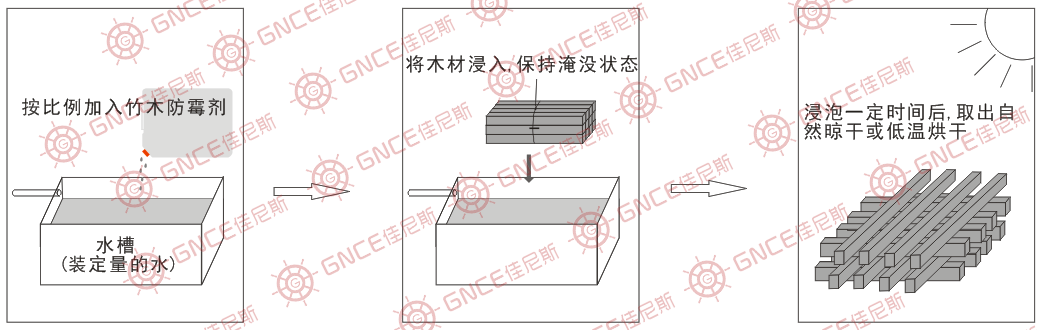
The reference ratio is 1:50~1:100. Engineers provide liquid preparation, soaking and drying suggestions based on material type, thickness and absorption status.
Communicate with material and process information to facilitate product selection to sample and production arrangements.
Operation and storage should follow the current product instructions and SDS requirements, and protective equipment should be equipped according to site conditions.
Material photos or samples, production process, target use environment and expected processing volume. When existing mould problems need to be improved, information on the occurrence, storage and transportation will be provided.
Communication materials and samplesWe provide relevant information about the corresponding model of MSDS / SDS, REACH, RoHS. You can apply by leaving a message on this page or calling. The technical team also answers questions about material application and export procurement information.
Handling, protective measures, storage and transport information.
Provide material information and documents for corresponding models to coordinate with the supply chain data of the target market.
Provide information on corresponding models and applicable project descriptions, and support material selection and supply chain document preparation.
Include the application and target market in your inquiry. When calling, quote model AEM5700-2.
The technical team provides product documents by model and coordinates material application with export procurement information.
AEM5700-2 is used for soaking and anti-mould treatment of bamboo and wood and rattan. Integrate liquid preparation, soaking and drying into the material processing process, and cooperate with subsequent gluing, painting and packaging processes.
The reference ratio is 1:50~1:100. Engineers provide liquid preparation and treatment plans based on bamboo and wood species, size and absorption status.
Engineers provide soaking suggestions based on material type, thickness and absorption status, and support natural drying or low-temperature drying to connect with subsequent processing.
We combine mould spots, material samples and production, storage and transportation records to design the cleaning treatment and subsequent mould prevention procedures for existing mould spots, which can be directly connected to the repacking inspection and rectification service.
We use the information you submit for this enquiry, sample arrangements and follow-up service. Privacy notice